Showing posts with label royalty. Show all posts

Tuesday, September 30, 2014

Hand of Fire by Judith Starkston

     I have been given the wonderful opportunity to review Judith Starkston's debut novel, Hand of Fire. This novel focuses on Briseis, a queen who is often no more than a footnote in the beautiful story of the Trojan War. I absolutely adore books that really flesh out otherwise minor characters since it is imperative for world-building. In Hand of Fire Briseis is given a beautifully woven back story. We see her spring to life as a young healing priestess who is taken captive by the Greeks.
     Leading the Greeks in their attacks is strong, handsome demi-god Achilles. Unlike many portrayals of Achilles in other works, Ms. Starkston's Achilles is well rounded and more complex. He is shown not as a mindless war machine, but as a young man who is aware of destiny and capable of being tender. Even after all the grief Achilles has caused for Briseis their relationship feels believable and real. 
      This story is so incredibly well researched, but not at all textbook-like that any reader, from the casual reader looking for a strong story to die hard history buffs, will find this book a pleasure. I really loved how this book made the ancient world come to life and be relatable to audiences while not losing its authenticity. It is evident Starkston felt such an attachment to her characters, because they are just so real! 
      All in all, I give this novel 4.5 out of 5 stars! If you are looking for an except of Hand of Fire, please click here, or if you are interested in purchasing it click here.
Judith Starkston


Find Q&A, book reviews, ancient recipes, historical background as well as on-going information about the historical fiction community on Starkston’s website www.JudithStarkston.com
Follow Judith Starkston on FB and Twitter   


Saturday, July 5, 2014

Real Life Game of Thrones


   The number-one reason I am loving George R.R. Martin's fantasy epic, A Song of Ice and Fire book series, is the hardcore political action. The second reason, is all the similarities between the fictional characters and real-life historical figures. The third reason, Jon Snow.

I mean c'mon...
But back to reason number two...

Martin's book series is the inspiration behind HBO's hit television show, Game of Thrones. The series is set in the land of Westeros, or the Seven Kingdoms. Martin has said he used The Wars of the Roses, which was a series of wars fought in England in the 15th century between warring families the York's and the Lancaster's. One of the most obvious relationships between the fictional and the factional are the names: two of the major families in Westeros are the Stark's and the Lannister's. However, more in depth, individual characters seem to be very similar to historical figures.


  • Robert Baratheon, king of the Seven Kingdoms seems to have a lot in common with the infamous King Henry VIII. Both kings were very athletic in their youth but as they aged declined into obesity and drunkenness. Kings Henry and Robert also both left the governing of their kingdoms to others.
  • Cersei Lannister, queen of the Seven Kingdoms and wife to Robert Baratheon. To me, Cersei is a character who seems to be based on pseudo-history. Cersei shares traits with the much maligned Queen Anne Boleyn. Anne Boleyn was accused of high treason and incest with her brother, much like the character, Cersei. However, Cersei was guilty... and there is still tons of debate over Anne's innocence.
  • Robb Stark, is the son of Eddard Stark, best friend to Robert Baratheon. In the chaos after the death of King Robert, Robb declares himself King in the North and fights many battles trying to win governance over Westeros. He gets so caught up in battle victory and love that marries a girl of little wealth and of little political gain. Much like King Edward VI. King Edward was a young King who fought hard to declare his place on the throne, but jeopardized the whole thing by marrying Elizabeth Woodville.
  • Daenerys Targaryen- The Targaryen family ruled Westeros long before Robert Baratheon fought his way to the Iron Throne. Daenerys is the only heir to the Targaryen family. Like the future King Henry VII, Daenerys was raised in exile, where she is plotting to regain her family's throne.
The Wall which stands to separate the known world from the wilderness is very similar to Hadrian's Wall. Hadrian's wall was built along the borders of the Roman Empire to keep out any outsiders. Imagine who scary a wall such as that would be.

Anybody see any different similarities to characters? And would like to see more Game of Thrones/ historical figures or events articles? I am very open to suggestions!


Tuesday, August 20, 2013

The Real Richard III

Posthumously edited portrait of King Richard
  Wrongly portrayed as one of the nastiest villains on the English stage, King Richard III needs to be looked upon once more in brighter light. In Shakespeare's play he is depicted as a malformed tyrant, incapable of any humane act. While it is possible that Richard suffered from scoliosis, chances are it was not obvious under his clothes. In what is probably the most famous portrait of Richard, X-Ray has been used to show that Richard's humped back was added many years after his death. King Richard's remains were recently discovered under a parking lot in Leicester. His skeleton shows many postmortem wounds, which verifies many contemporary accounts. Richard's body was mutilated and abused after his defeat at Bosworth Field (which I will discuss more next post!)
   Born on October 2, 1452, Richard was the youngest of the Duke of York's sons. After his father's death, Richard and his brothers George and Edward, the future King Edward IV, were taken into the guardianship of Richard Neville, Earl of Warwick, who was often called 'the Kingmaker'. Richard's brother Edward had to fight to gain his throne, and Richard was always at his side. Richard was there through thick and thin. He fled with Edward to exile and returned to see him crowned King of England. 
  When Edward was crowned he rewarded his brother with the title of Duke of Gloucester. Along with the prestigious title Richard was given Anne Neville, daughter of his former guardian, the Earl of Warwick, in marriage. To the marriage Anne brought with her the extensive Neville estates located in northern England. 
  Now is when we see Richard's life become much more exciting. Upon the death of his brother the king, Richard was given guardianship of his nephew, the heir to the throne, and temporary control of the kingdom. Richard had agreed to rule until his nephew prince Edward could be crowned king. 
   And here is where Richard gets his shady reputation: On his way into London Richard had his young nephew thrown into the Tower of London. At first, Richard claimed it was for his safety, but only a short time later Richard declared the prince and his siblings illegitimate, making Richard, Duke of Gloucester, heir to the throne. His coronation took place the following month. 
Facial Reconstruction of King Richard
   However, Richard did not feel safe with only one of his nephews in the Tower. He also placed Edward's younger brother Prince Richard in the Tower, too. Soon after joining his brother in the Tower both boys disappeared. The boys were both presumed dead- murdered on Richard's orders. What we know now, however, is many people had the opportunity and the motive to kill the two boys. Sir Richard Brackenbury, the constable of the Tower, Henry Tudor, who needed the boys dead in order to seize the throne for himself, or even Henry Tudor's ambitious mother, Margaret Beaufort. Even after many excavations in the Tower of London no skeletons have been found that fit the boy's ages.

          Look Forward to my next article The Real Richard III Part Two:                                                           Bosworth and Beyond

Monday, May 28, 2012

Days of Splendor, Days of Sorrow

      Days of Splendor, Days of Sorrow by Juliet Grey is the sequel to Becoming Marie Antoinette. Days of Splendor, Days of Sorrow spans fifteen years in the tumultuous life of one of history's favorite villains, Queen Marie Antoinette. Marie Antoinette had a lot to deal with during her reign as queen from the stifling etiquette of Versailles to the rumour mill that was constantly running rampant by many so-called "friends".
      Juliet Grey does an exceptional job portraying the beautiful tableau's of Pre-Revolution France. Grey has put a great deal of research into this book as you can feel the tension, love, and sorrow as if you were there. One can just imagine the riveting trails and executions of The Diamond Necklace Affair. This book offers a look into the many different relationships Marie Antoinette had including with her husband King Louis XVI, her lover, Count Axel von Fersen, her friends, the Duchesse de Polignac and the Princesse de Lamballe. Marie Antoinette had a very loving relationship with her children the sorrow she felt at her miscarriages and during the death of two children are truly heart-wrenching.
        I would truly recommend this book because it's exceptional attention to detail and the unbelievably true story. Days of Splendor, Days of Sorrow is a very apt title for this novel starting with the splendor of a glorious coronation and ascension to the throne, but at the conclusion the sorrow of losing a child and the end of their lives as they knew it with the start of the Revolution. The conclusion to the Marie Antoinette series The Last October Sky will be out in 2013.

Wednesday, May 9, 2012

How did King Tut die?

In honor of Howard Carter's birthday, here is a video of how King Tut died. Nobody really knows how and it has been a center of controversy for thousands of years. This video is courtesy of history.com


Tuesday, March 27, 2012

Juana la Loca

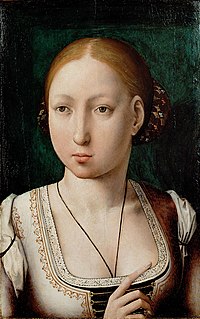
Juana, before the mad
I am so glad I live in a time of modern psychiatric medicine. All throughout royal family trees you see weird family members with weird epithets like "the bewitched", "the crazy", or in this case "the mad." Nowadays, a psychiatrist would just throw a handful of pills at them and who knows how different we would be now. The reason for all of this was to keep power in the family. A great way to do that? Inbreeding! The ancient Egyptians took goddess Isis and her brother/husband Osiris as prime examples. In Europe the relationship was not that close, but many times first cousins married without a word being said. Today inter-familial marriages would garner town names like Cousin-wood for example. Anyhow, mental instability was rampant in royal families. Here is the tale of just that Juana of Castile.   
       Born in 1479 to King Ferdinand of Aragon and Queen Isabella of Castile, Juana grew up expecting nothing more but to grow up and expand her parent's power and wealth. Her sedate childhood was no indication of the passionate person she would become. She was one of the most educated women of her tine speaking Castilian, Leonese. Galician-Portuguese, Catalan, French, and Latin; also, all accounts of her attest to her beauty. Juana was said to have had auburn hair and blue eyes, a trait she share with her sister-queen, Catherine of Aragon, future wife of King Henry VIII.
Phillip the "Handsome(?)"
       Unlike many other royal maidens at the time Juana lucked up. At the age of sixteen Juana was betrothed to Phillip the Handsome, Duke of Burgundy. Phillip was the son of the Holy Roman Emperor Maximilian I. The marriage of Phillip to Juana was to unite to lands so they could stand up to growing French power. Phillip's epithet must have been true, at first sight Juana fell madly in love with her husband to-be. The couple begged to married the night they met, both were so fond of each other. They started out in uncommon marital bliss.
      It's just to bad that Phillip didn't only have eyes for Juana. Phillip had many mistress' during his marriage to Juana, including one unfortunate lady-in-waiting who got a haircut straight from the duchess herself due to a little fling with the duke. Juana left the discarded the hair as a friendly reminder on Phillip's pillow. Despite the affairs Juana gave birth to five children in rapid succession. Juana also practiced witchcraft making love spells.
     Even after her marriage to Phillip, Juana kept loyalty to all things Spanish. Unfortunately Queen Isabella died and left Juana Queen of Castile. King Ferdinand did not like this, so he used Juana's mad behavior to try to grab Castile from her. Juana protested, she wanted to be queen. Then came the psychotic breakdown. Phillip died. Juana was pregnant with their sixth child at the time. She embraced the corpse as if it was still living. She accompanied it on the funeral procession, but insisted that they travel at night so no women would be tempted by him. Occasionally, she would even open the coffin and greet the dead body as if he still lived. 
The convent Juana was kept  at
for fifty years.
     Obviously, King Ferdinand milked this for all it was worth-after all countries were worth more than daughters. The king declared Juana insane and locked her inside a chamber in a convent in Tordesilles for the rest of her life.After her father died and her son came to rule he didn't have much mercy on his mother either. Juana died in 1555 at the age of seventy-five, she had been imprisoned for nearly fifty years.


Wednesday, March 14, 2012

The Queen of Misrule

* This is about the sad life of Catherine Howard, who was a lot more like her cousin Anne, than many believed. Please excuse the length I just really like the subject of the wives of Henry VIII.       
           
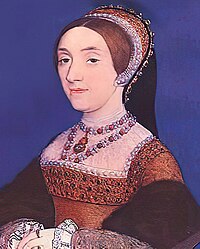
Catherine Howard's birth date is unknown, there is only one portrait believed to be of her, yet she was queen.She was born to Lord Edmund Howard and Joyce Culpeper. As a granddaughter of Thomas Howard, 2nd Duke of Norfolk, Catherine had an aristocratic pedigree, but her father, who was a younger son, was not well-off owing to primogeniture and the large size of his family. As a result, he was often reduced to begging for handouts from his more powerful relatives. In 1531, he was appointed Controller of Calais. He was dismissed from his post in 1539, and died in March of the same year. Catherine was also the niece of Elizabeth Howard, who was the mother of Anne Boleyn. This would make Anne and her first cousins, and later on so much more.
Catherine Howard
          Early in her life,  the orphaned Catherine was sent to live with her step-grandmother, the Dowager Duchess of Norfolk. At her estate at Lambeth the Duchess had many children of less-fortunate noble under her command. While sending young children to be educated and trained in aristocratic households other than their own was common for centuries among European nobles, supervision at Lambeth was apparently lax. An apparent effect of this was on the deficiency of Catherine's education.
          Her character has often been described as vivacious, beautiful, and buxom, but never scholarly or devout. The casual upbringing in the licentious atmosphere of the Duchess' household led Catherine's music teacher, Henry Mannox, to start a sexual relationship with her around 1536, when she was between the ages of eleven and sixteen. He later gave evidence in the inquiry against her. Mannox and Catherine both confessed during her adultery trial that they had engaged in sexual contact, but not intercourse. Catherine was even quoted as saying, "At the flattering and fair persuasions of Mannox, being but a young girl, I suffered him at sundry times to handle and touch the secret parts of my body which neither became me with honesty to permit nor him to require."
        This adolescent affair came to an end in 1538, when Catherine was pursued by a secretary of the Dowager Duchess' household, Francis Dereham. They became lovers, addressing each other as "husband" and "wife". Dereham also entrusted Catherine with various wifely duties, such as keeping his money when he was away on business. Many of Catherine's roommates among the Dowager Duchess' maids of honour and attendants knew of the relationship, which apparently ended in 1539 when the Dowager Duchess caught wind of the matter. Despite this disapproval, Catherine and Dereham may have parted with intentions to marry upon his return from Ireland, agreeing to a precontract, as it was then known. If indeed they had exchanged vows of their intention to marry before having sexual intercourse, they would have been considered married in the eyes of the Church.
         Catherine's uncle the Duke of Norfolk had found Catherine a place at Court as a lady-in-waiting to King Henry VIII's new bride, German princess, Anne of Cleaves. Being a young and beautiful lady-in-waiting to the king's wife, whom he never displayed interest in, Catherine soon caught the eye of the king.
          The Howard's who were seeking to regain the position they had had when Anne Boleyn was queen, trained Catherine to make sure she became the king's new mistress and later wife.       As the King's interest in Catherine grew, so did their influence. Within months of her arrival at Court, Henry bestowed gifts of land and expensive cloth upon Catherine.
         When Henry had his marriage to Anne of Cleves annulled on 9 July 1540, rumours swirled that Catherine was pregnant with his child. Their quick marriage a mere three weeks after the annulment, reflected Henry's lifelong urgency to secure the Tudor succession by fathering healthy, legitimate sons, especially since he only had one, Edward. Henry, nearing fifty and expanding in girth, showered his young bride with wealth, jewels, and other expensive gifts.  Catherine's motto, "Non autre volonté que la sienne", or, "No other will but his", supposedly reflected her desire to keep Henry, an ailing man three decades her senior, content. At this point in his life, the King weighed around300 pounds, and had a foul-smelling, festering ulcer on his thigh that had to be drained daily.
Possible Portrait of Catherine Howard
         Early in 1541, Catherine embarked upon a romance with Henry's favorite male courtier, Thomas Culpeper, a young man who, according to Dereham's testimony "had succeeded [him] in the Queen's affections", and who Catherine had considered marrying during her time as a maid-of-honour to Anne of Cleves. The couple's meetings were arranged by one of Catherine's older ladies-in-waiting, Lady Rochford, the widow of Catherine's cousin, George Boleyn, the brother of Anne Boleyn.
        Catherine and Henry toured England together in the summer of 1541, and preparations for any signs of pregnancy, which would have led to a coronation, were in place, indicating that the royal couple were sexually active with each other. During this time, however, a crisis began to loom over Catherine. People who had witnessed her indiscretions at Lambeth began to contact her for favours in return for their silence, and many of them were appointed to her household. Most disastrously, Catherine appointed Francis Dereham as her personal secretary, at the urging of the Dowager Duchess of Norfolk. This miscalculation led to the charges of treason and adultery against her two years after her marriage to the King. Catherine Howard was sentenced to beheading at seven a.m. on February 13.
        The night before her execution, Catherine is believed to have spent many hours practicing how to lay her head upon the block, which had been brought to her at her request. She died with relative composure, but looked pale and terrified and required assistance to climb the scaffold. She made a speech describing her punishment as "worthy and just" and asked for mercy for her family and prayers for her soul. According to popular folklore, her final words were, "I die a Queen, but I would rather have died the wife of Culpeper," although this is widely discredited. Catherine was beheaded with a single stroke, and her body was buried in an unmarked grave in the nearby chapel of St. Peter ad Vincula, where the bodies of her cousins, Anne and George Boleyn, also lay. Henry did not attend.

Saturday, September 10, 2011

What to wear to your execution?

     I know this is a macabre subject, but it has always intrigued me. What did royals choose to wear before they lost their heads?
Think about it. You are most likely going to be buried in it and it will be your last public viewing. How do you decide which outfit to wear for such a momentous historical occasion? I think the last choice of clothing says a lot about how royals chose to be remembered.


King Charles I
Charles decided to dress warm for the occasion and broke out two heavy shirts. He was worried that he would shiver in the cold and consequently look fearful. Charles had always been viewed as the weakling in the shadow of his stronger, older brother, Henry so even at his death he was concerned about appearing brave.Charles I strikes me as the kind of ruler who focuses on the details instead of seeing the big picture. At his death, he is worried more about his hair than the head he is about to lose.

Queen Anne Boleyn
                                                                                                                                          
Queen Anne
Anne traded in her square plunging necklines and went to her execution with a conservative make-over. She chose to wear a loose dark, gray gown of damask trimmed in fur with a matronly mantle of ermine covering her regal shoulders. More interestingly, she adorned her soon-to-be-missing head with the simple, gabled head-dress which was frequently worn by her demure predecessor Jane Seymour. This hairstyle choice is an obvious contradiction to her signature, and far more risque French hood which all her attendants had once copied. With one swipe of the executioner’s sword…French hoods were out and making your head look like a church steeple was back in vogue.

Mary Queen of Scots
Mary chose a crimson petticoat – a clear symbol of a catholic martyr. When Mary was convicted of plotting Queen Elizabeth's assassination, she knew her death would bring outcries from Catholic nations such as Spain and France. By her simple choice of clothing, Mary shifted the cause of her downfall from treason to religious persecution. Although religion was undeniably a huge factor in her death, that blazing red petticoat was one last stir of the pot from a tragic queen.After her death, Mary’s red petticoat was burned for the fear that it would become another saint’s relic

Queen Marie Antoinette
Marie didn’t get much say in the matter. She was even forbidden to wear the tattered and torn, black mourning dress she had been wearing for two months straight, most likely because the revolutionaries did not want any public sympathy for her. Instead, Marie climbed into an old, rubbish cart wearing a clean, white chemise that she had saved for the occasion and a fichu (large, squarish kerchief) over her shoulders. A pleated white cap adorned her famed, strawberry-blond, hair which had been cropped at the neck.
Not as glamorus as you'd think, right?


Wednesday, August 24, 2011

She's way to old for you Henri!

                                                                Catherine de' Medici
          
           Ok, so how would you feel if your nineteen year-old husband of five years was in love with woman twice his age!! Catherine de'Medici had to deal with exactly that problem and that problems name was Diane de' Poitiers. Diane de' Poitiers was thirty-eight years old when Henri fell for her.
           The two eldest princes, François and Henri, were retained as hostages in Spain in exchange for their father. Because the ransom was not paid in time, the two boys, eight and seven at the time, had to spend nearly four years isolated in a bleak castle, facing an uncertain future. Henri found solace by reading the tale Amadis de Gaula. The experience may account for the strong impression that Diane made on him, as the very embodiment of the ideal gentlewomen he read about in Amadismentor to him and teach him courtly manners. At the tournament held for the coronation of Francis's new wife Eleanor, the dauphin, François saluted the new queen as expected, Henri addressed his salute to Diane. Diane and Catherine were actually related to one another, being both descendants of the La Tour d'Auvergne family. Indeed, to Catherine, Diane was an intrusive elder cousin as well as a rival. Diane helped nurse Catherine back to health when she contracted scarlet fever. Diane was in charge of the education of her and Henri's children until 1551;  While Henri and Catherine would eventually have 10 children together, and despite the occasional affair, Diane de Poitiers would remain Henri's lifelong companion, and for the next 25 years she would be the most powerful influence in his life.
Diane de' Poitiers

Thursday, August 11, 2011

The Royal Disease

     Hemophilia is a disease which impairs a body's blood clotting ability. Commonly, it is carried through mothers who do not show any symptoms of the disease making it really hard to detect. Hemophilia became prominent in European royalty due to the Grandmother of Europe, Queen Victoria. Queen Victoria was a silent carrier who passed it on to her son, Leopold and her many daughters who in turn passed it onto many of the Royal families of Russia, Germany, and Spain. 
Photograph of Queen Victoria, 1882     In Russia, Tsarevich Alexei Nicholaevich, son of Nicholas II, was a descendant of Queen Victoria through his mother Empress Alexandra and suffered from hemophilia. It was claimed that Rasputin was successful at treating the Tsarevich's hemophilia. At the time, a common treatment administered by professional doctors was to use aspirin, which worsened rather than lessened the problem. It is believed that, by simply advising against the medical treatment, Rasputin could bring visible and significant improvement to the condition of Alexei.
    In Spain two of Queen Victoria's Great Grandsons died of internal bleeding after separate minor car accidents.


Tuesday, June 14, 2011

Reading Cleopatra Confesses

         I love books written by author, Carolyn Meyer. So naturally when I heard she was writing a Cleopatra book I flipped. Cleopatra is one of my favorite women in history. She was smart, beautiful, and two of the most powerful men in the world loved her. I am currently on page 181 out of 283 and so far I really like this book. There isn't really a whole lot of dialogue so you feel like you know Cleopatra on an intimate BFF level, and I like that. If you like ancient Egypt chances are you will like this book. Not a hard read and definitely a good book!


LinkWithin

Related Posts Plugin for WordPress, Blogger...